
.svg)
Spring on the Mount Washington Cog Railway
FEATURED:Spring Might Be the Best Time to Ride
Discover

February in Vermont is not a month for dabbling. It’s a month for commitment. Winter is fully established now. The snow is deep. The nights are long. And the state settles into a rhythm that feels slower, steadier, and more intentional. This is not the Vermont of leaf peeping or sugar season. This is Vermont at its most self-contained, when people stay close to home, traditions matter more than events, and the landscape asks you to meet it where it is. For travelers willing to embrace winter rather than escape it, February offers something rare: authentic Vermont without distraction. No crowds. No seasonal performances. Just towns, terrain, and a sense of place that feels deeply rooted.
Three destinations capture Vermont’s February personality perfectly: The Northeast Kingdom, Middlebury, and Quechee Gorge in winter. Each offers a different way to experience the season - remote, intellectual, and elemental, and together they reveal why February belongs to Vermont.
If you want to understand winter in Vermont, you go north, all the way north, to the Northeast Kingdom. This is the most remote and sparsely populated region of the state, and February suits it perfectly. Snow blankets the hills and forests. Lakes freeze solid. Roads feel quieter, longer, and more deliberate. And the landscape takes on a clarity that only deep winter provides. Towns like Burke, East Burke, and Lyndonville don’t perform for visitors. They exist as they always have, resilient, practical, and connected to the land. In February, daily life here continues at winter speed. Snowmobiles share the roads. Locals know exactly when storms are coming. Conversations are unhurried but purposeful.
Burke Mountain looms over the region, its slopes carved cleanly into the hillside. Even if you don’t ski, the presence of the mountain defines the place. It anchors the landscape and reminds you that winter here is not an inconvenience, it’s the season everything is built around.
The Kingdom Trails network, buried under snow, becomes a winter playground for fat biking, snowshoeing, and quiet exploration. The forests feel immense and undisturbed. The silence is not empty, it’s full. February in the Northeast Kingdom isn’t about entertainment. It’s about endurance. And that’s what makes it unforgettable.
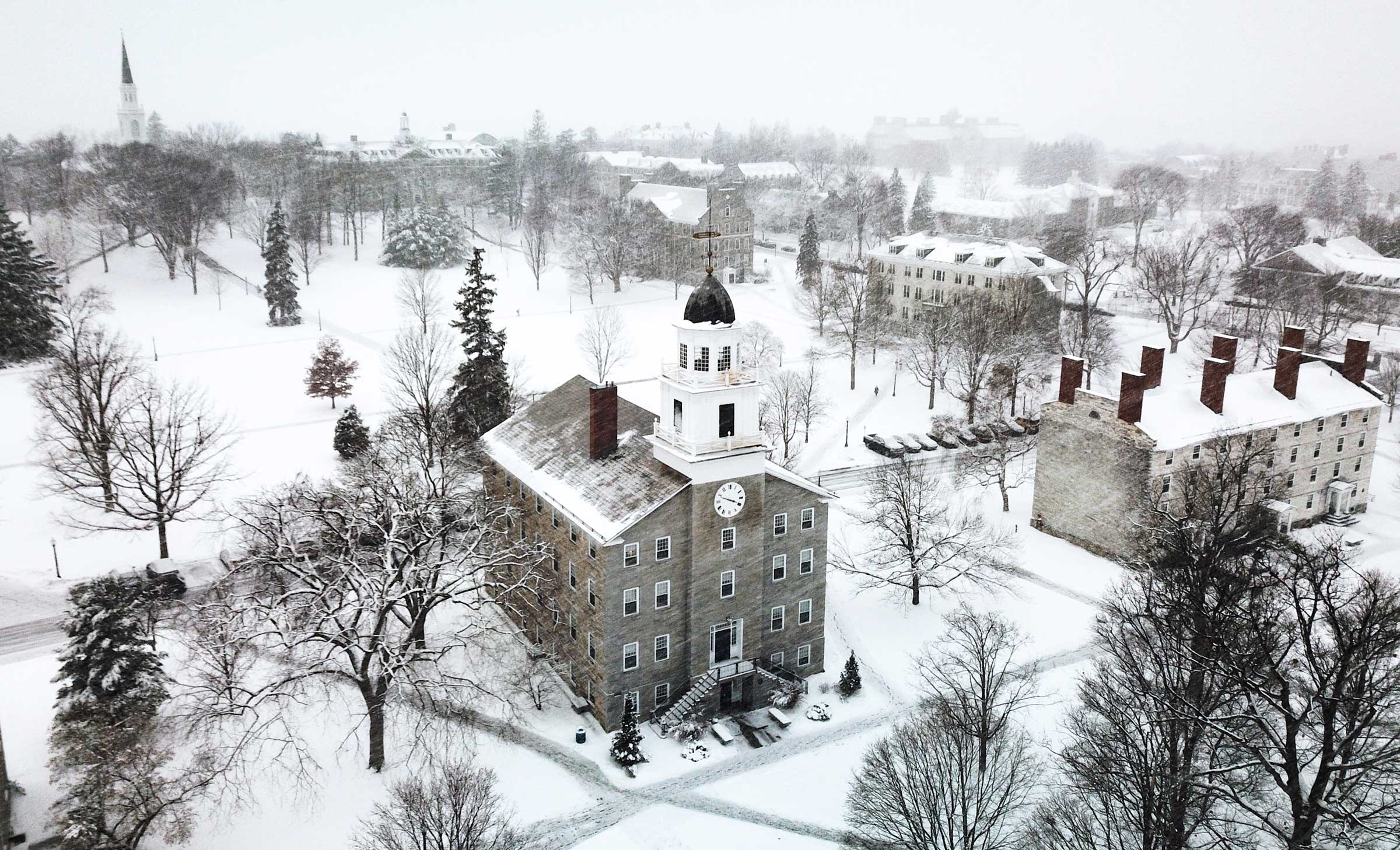
Where the Northeast Kingdom feels expansive and remote, Middlebury feels focused, intellectual, and quietly alive, even in February. This classic Vermont college town sits comfortably along Otter Creek, framed by snow-covered fields and distant mountain views. In winter, Middlebury doesn’t slow down so much as it turns inward. The energy shifts from outdoors to ideas, from movement to reflection. Middlebury College anchors the town, and February is when its presence is most visible. Students move between buildings bundled against the cold. Lights glow in library windows long after dark. Lectures, performances, and exhibitions continue regardless of weather.
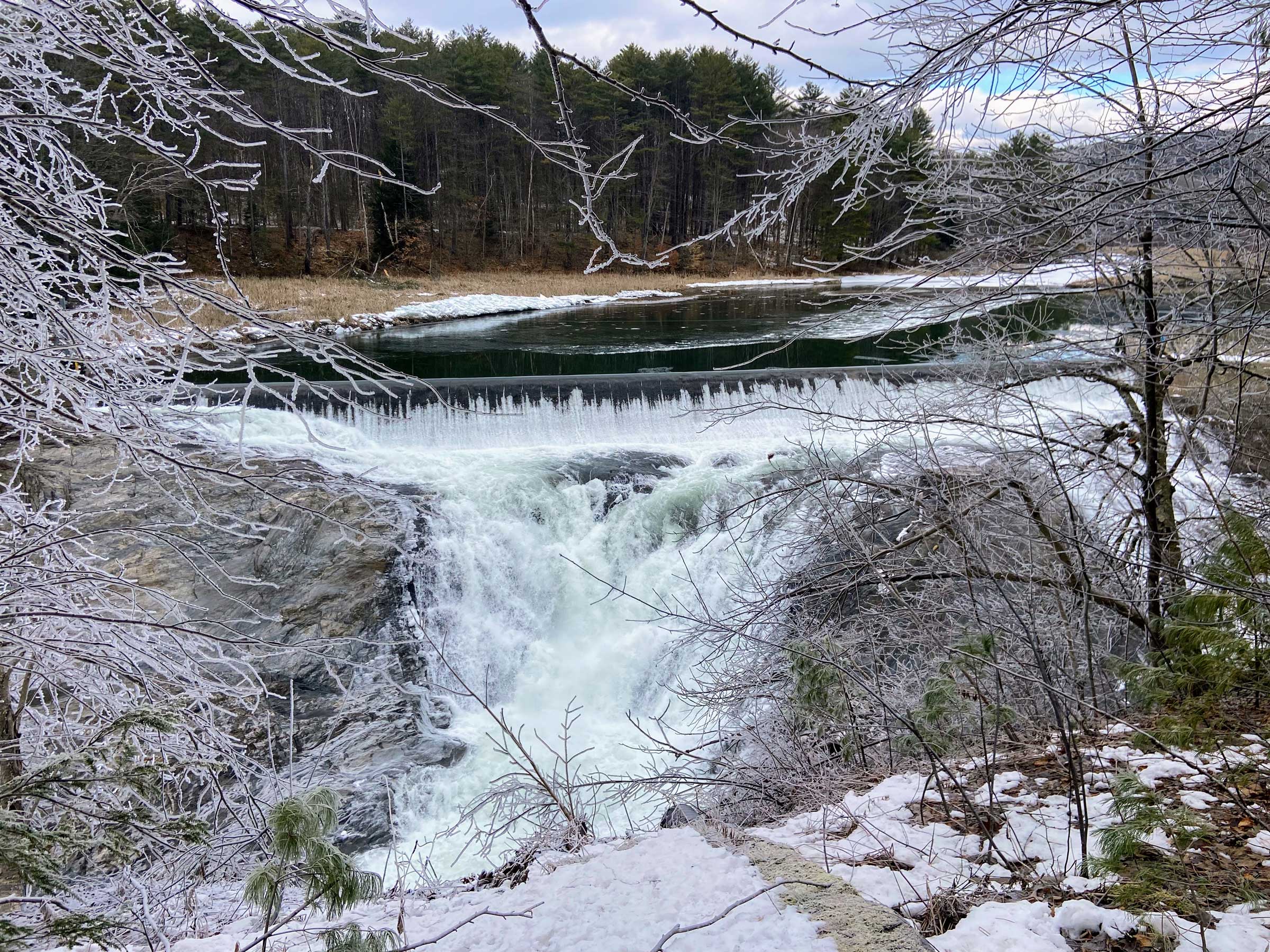
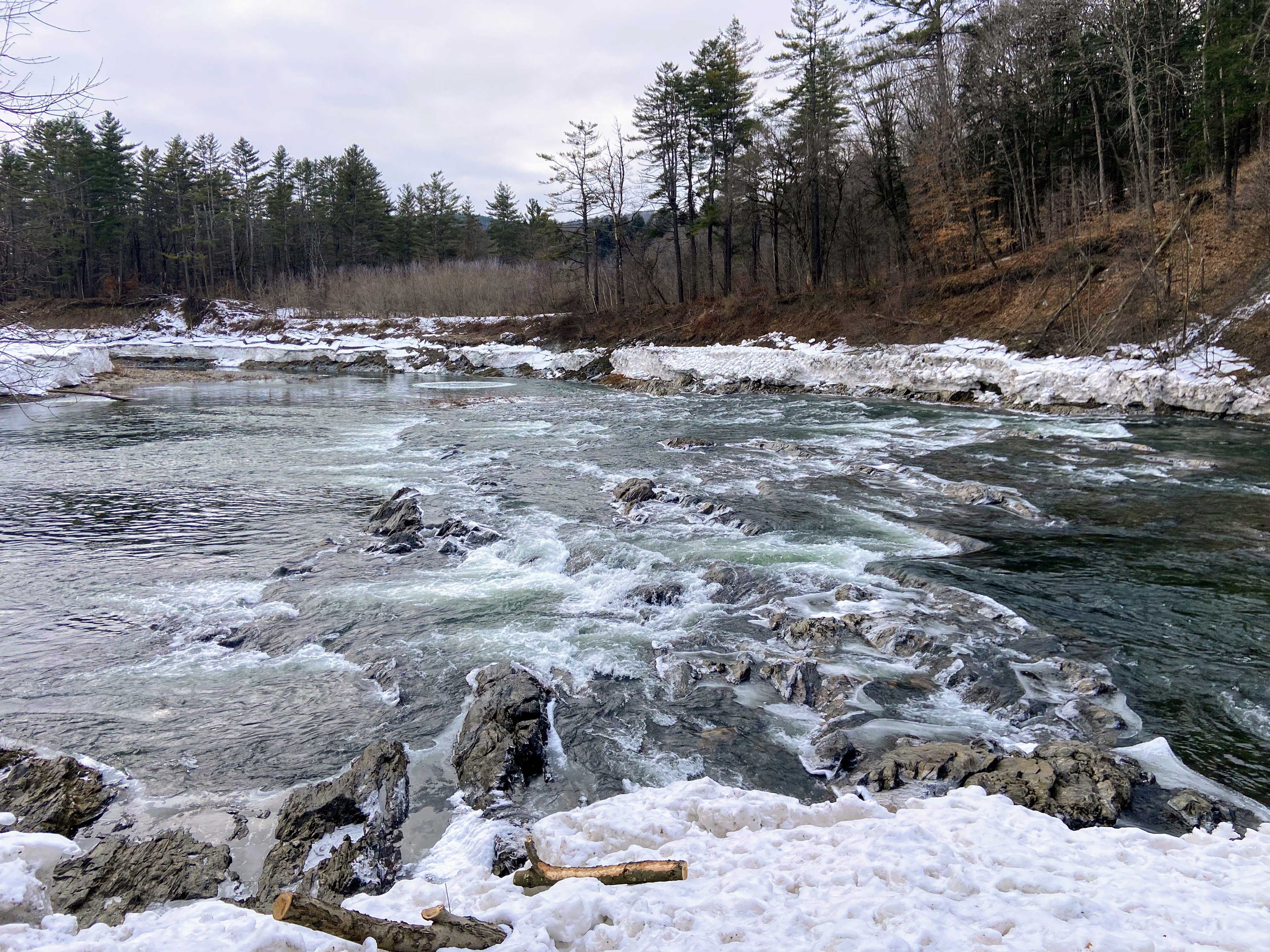
Walking through town in February, you notice how well Middlebury holds winter. Brick buildings feel solid. The downtown streets remain walkable. Cafés become gathering places rather than quick stops. Conversations linger longer. Otter Creek runs partially frozen through town, its movement steady and deliberate. Snow piles along its banks. The nearby Otter Creek Falls are especially striking in winter, where ice formations cling to rock faces and rushing water cuts through the cold. Middlebury in February is not sleepy, it’s contemplative. This is Vermont as a thinking place, a place where winter creates space for ideas rather than shutting life down.
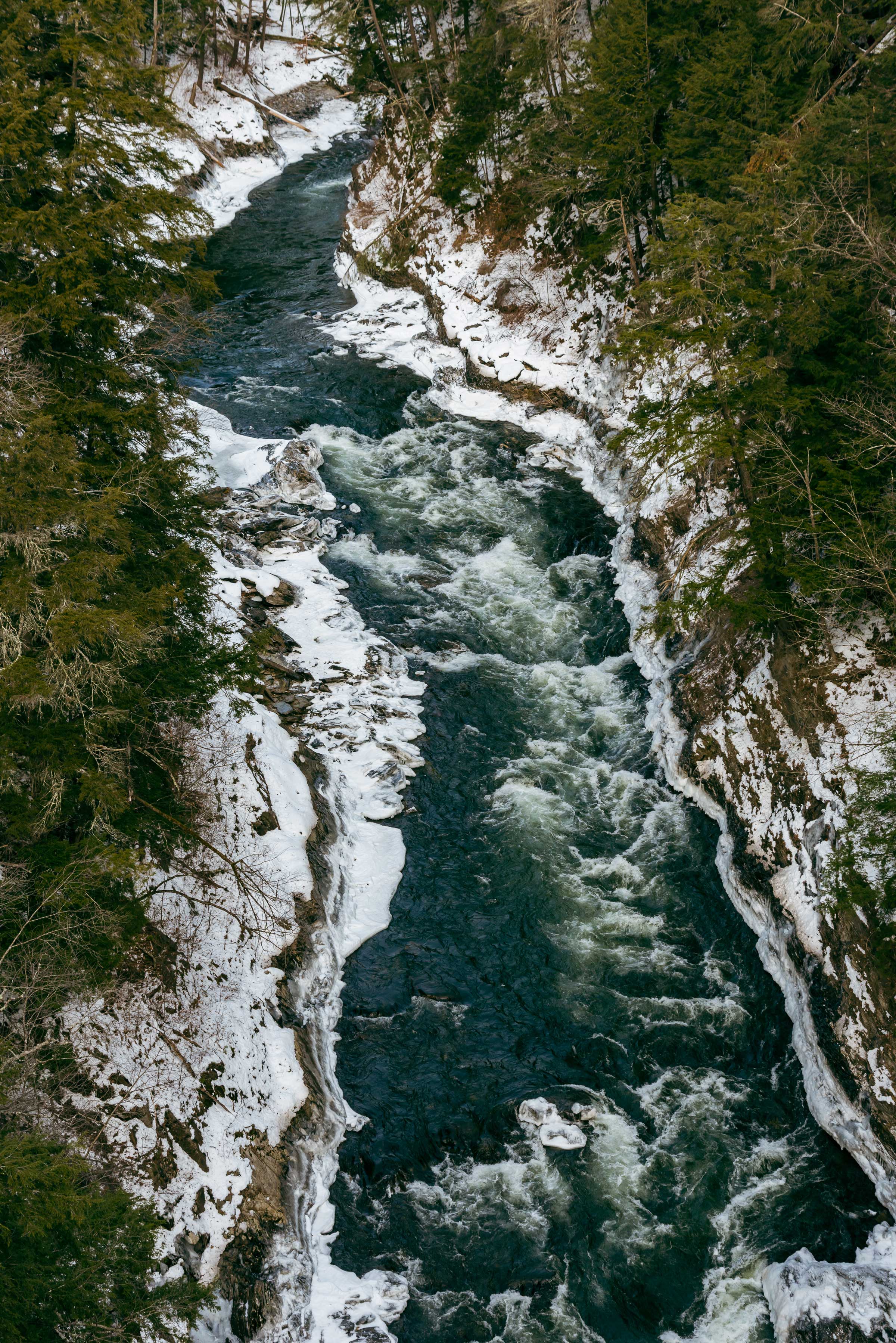
Some landscapes demand winter, and Quechee Gorge is one of them. Often called Vermont’s “Little Grand Canyon,” the gorge feels dramatically different in February. Snow clings to the cliff walls. Ice forms along the edges of the Ottauquechee River far below. The trees, stripped of leaves, reveal the full depth and scale of the chasm. Standing on the bridge in winter, you feel the exposure more acutely. The cold air moves freely through the gorge. Sound travels differently. The landscape feels vast and elemental.
The surrounding trails, quieter in February, offer a completely different experience than in warmer months. Snow muffles footsteps. Ice sparkles in shaded areas. Every view feels sharper, less softened by foliage.
Quechee in winter is not a casual stop. It’s a moment. It reminds you that Vermont’s beauty is not just pastoral, it’s powerful, carved by time and water and weather. February strips away the comfortable framing and lets the land speak plainly.
February is also one of the best times to explore Vermont by car, slowly. Snow-lined back roads wind through villages, past farms, and across historic covered bridges that feel perfectly suited to winter scenery. Bridges like Cornish-Windsor, Taftsville, and smaller rural spans appear more striking against white landscapes and gray skies.
These drives are not about efficiency. They’re about movement through space. About watching smoke rise from chimneys. About seeing how towns sit within the land rather than on top of it.
February invites this kind of travel. Unhurried. Observant. Grounded.
February exposes places that rely on seasonal charm. Vermont doesn’t rely on charm. It relies on character. This state was built to endure winter. Its towns are compact. Its buildings are sturdy. Its people understand the season. And in February, that relationship becomes visible.
The Northeast Kingdom shows you Vermont’s toughness.
Middlebury shows its intellect.
Quechee Gorge shows you its raw power.
Together, they create a portrait of a place that doesn’t need to soften winter to survive it.
February in Vermont is not for everyone, and that’s exactly why it matters. This is a month that rewards travelers who are willing to slow down, bundle up, and experience a place as it truly is. Not curated. Not edited. Just real. Vermont in February doesn’t bloom. It holds. And in that stillness, it reveals its strength.