
.svg)
Spring on the Mount Washington Cog Railway
FEATURED:Spring Might Be the Best Time to Ride
Discover

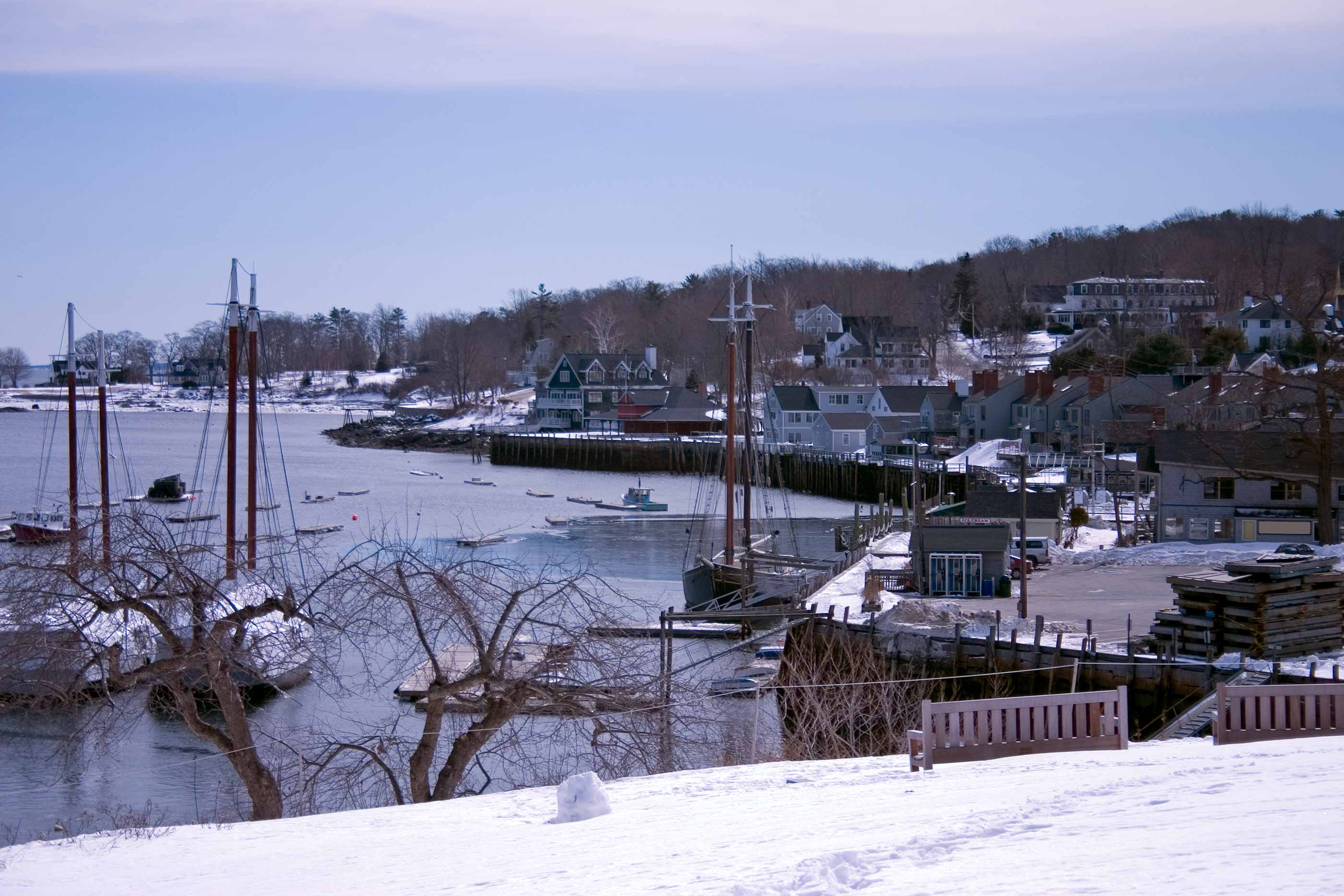
It always begins quietly, a faint shimmer in the air, a taste of salt and cold, the promise of snow where the ocean meets the rocks.
By mid-November, Maine’s coast changes hands. The tourists are gone, the docks are bare, and the sea turns the color of pewter. But even in this hush, life along the shoreline doesn’t stop; it simply lowers its voice.
This is the moment before winter, when fishermen still mend traps, when innkeepers light their first fires, and when the land seems to hold its breath waiting for the first flakes to fall.
For travelers, it’s also the perfect time to look closer. Maine’s coast in early winter is less about motion and more about mood, texture, light, and the slow rhythm of endurance.
Here are four towns where that feeling lives and breathes long after summer fades.
No other place captures Maine’s coastal contrast quite like Camden.
In July, its harbor teems with sailboats. By November, it becomes a watercolor in gray and blue. The masts clink in the cold wind, the hills behind town rise dusted with frost, and the smell of wood smoke drifts down from Mount Battie.
Locals call this the “quiet season,” though that doesn’t mean empty. Camden Harbor Park still hosts walkers bundled in wool coats. The Camden Harbormaster Webcam shows gulls circling above the still water, and the shops along Main Street glow softly through early dusk.
Inside Boynton-McKay Café, the espresso machine hisses, and you can hear the faint rhythm of snow beginning on the roof. It’s Maine stripped to its essentials - raw, patient, beautiful.
Just a few minutes south sits Rockport, smaller and quieter than Camden, but equally steeped in charm.
The harbor curves like a half-moon, its docks lined with lobster traps that gleam silver when the frost hits them at dawn. The Andre the Seal Monument, a local favorite, stands silent under a dusting of snow, a tribute to the bond between people and sea that defines this coast.
In November, Rockport feels like a painting waiting to dry. The Center for Maine Contemporary Art remains open, showcasing regional artists who capture this very season: gray skies, red buoys, white barns.
Everything about the place whispers instead of shouts, the clapboard homes, the wind through spruce trees, the low call of a foghorn rolling in from Penobscot Bay.
For photographers, it’s a dream; for writers, a reminder that stillness has sound.
Further down the coast, Boothbay Harbor glows like an ember in the dark.
Each November, as temperatures drop, the town prepares for the Gardens Aglow festival at the Coastal Maine Botanical Gardens, a spectacular display of half a million lights draped over trees, bridges, and greenhouses.
But even beyond the festival, Boothbay keeps its charm honest. The harbor stays working, lobstermen hauling traps through light snow, diners open year-round serving chowder thick enough to hold a spoon upright, and the town’s string of footbridges glimmering with small white bulbs.
From your desk, you can visit the event virtually through videos and live streams, where reflections of the lights shimmer on the water like constellations.
It’s proof that even in the coldest months, Maine doesn’t go dark, it just burns slower.
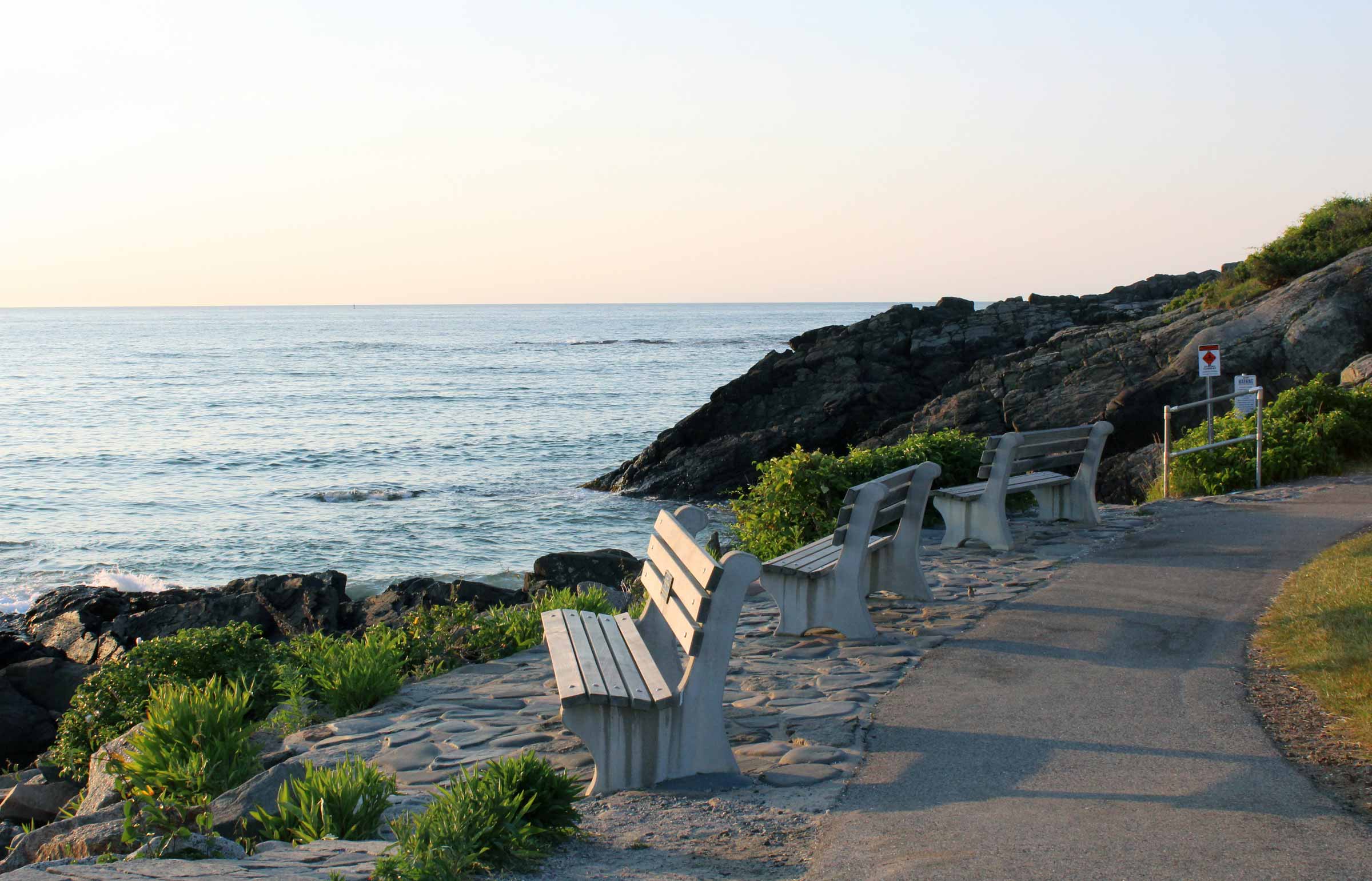
Down at the southern edge of the state, Ogunquit offers one of the most poetic places to witness the first snow: the Marginal Way.
This mile-long cliff path runs from Perkins Cove to Ogunquit Beach, hugging the coastline as waves crash far below. In summer it’s crowded; in November, it belongs to you alone.
As snow begins to fall, the granite turns slick, the sea darkens to steel, and the little cottages along the path flicker with firelight. The scene feels cinematic, like something from a Thomas Cole painting come to life.
By the time you reach the cove, fishermen are already pulling in the last traps of the season, their orange rain gear bright against the white spray.
Ogunquit’s small downtown with its cafés, galleries, and the Front Porch Piano Bar, stays open just long enough for locals to toast another year survived. Then the town exhales and waits for spring.
There’s a phrase you hear along the coast this time of year:
“The ocean doesn’t freeze, but it sleeps.”
That’s what early winter feels like in Maine, not death, but dormancy. The waves still move, but slower. The air still smells of salt, but sharper. Life still hums beneath the ice, patient and unhurried.
It’s a reminder that stillness is not the absence of life; it’s the shape of renewal.
You can travel Maine’s quiet coast without leaving your chair:
Camden Harbormaster Webcam - watch real-time harbor footage as snow dusts the docks.
Visit Maine Photo Gallery (visitmaine.com) - high-resolution images of winter harbors statewide.
Gardens Aglow Virtual Tours - view the Boothbay light display online.
Marginal Way Cam (Ogunquit) - a live seaside view that captures storms and sunsets in equal measure.
Coastal Maine Botanical Gardens YouTube - behind-the-scenes videos on how they light the forest.
Together, they offer a full picture of Maine’s most underrated season - austere, luminous, and deeply human.
That first snow along the coast isn’t just weather. It’s punctuation, the moment between what’s been and what’s coming.
In places like Camden, Rockport, Boothbay, and Ogunquit, it’s when the world narrows to essentials: light, heat, community, and time. The fishermen tie down their boats. The shopkeepers sweep their stoops. The innkeepers stoke their fires
And somewhere beyond the breakwater, the sea keeps breathing, endless, cold, faithful.
It’s hard to describe if you haven’t stood there yourself, but easy to imagine if you’ve ever craved stillness. The sound of snow hitting salt water stays with you, soft, fleeting, eternal.
That’s Maine in November: the first snow at the edge of the sea, and the quiet knowledge that everything endures.